Decision notes
What an order actually commits you to
A quote proposes, an order commits. What changes the day it is activated, what you will no longer be able to edit, and why it is not the end of the work but the start.
How claims are labelled
What changes on activation day
While it is a quote, everything is negotiable. On activation three things happen at once, and none of them is undone with a click.
- The customer now “holds” something. Each line becomes a record of what they own, with its quantity and dates. That record, not the quote, is what amendments and renewals read next.
- Billing starts. Instalments are calculated. Correcting them afterwards means correcting invoices, not a setting.
- Some information locks. Fields stop being editable once the order is active; you go through an amendment.
What the business has to decide first
- Who is allowed to activate. It is a committing act, not an administrative step. In many organisations the rep prepares and someone else activates.
- What you allow yourself to change afterwards. Quantity, date, price: each has a different answer, and they are settled once.
- What an order must carry to be billable. A bill-to contact, an address, a frequency. These are never asked for at the right moment: it is for the business to say they are mandatory here.
What an order opens behind it
An activated order does not translate into a single act. It opens a series of things to do, and billing is only one of them.
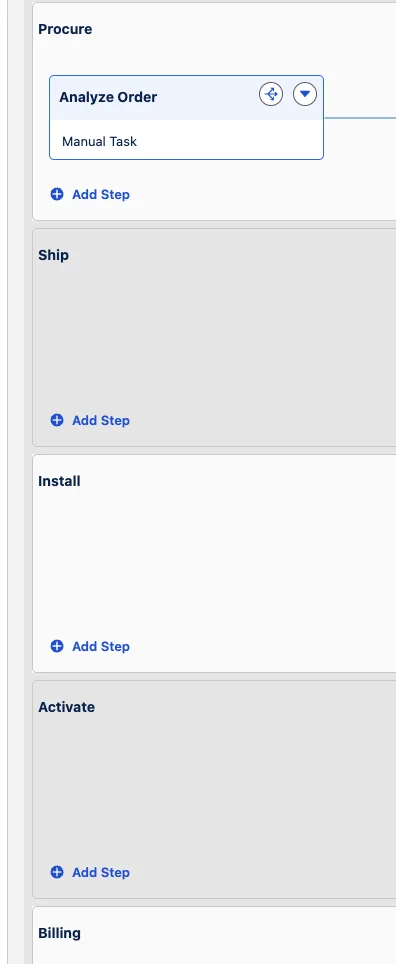
If your product ships, installs or activates before it can be billed, that list exists at your company — tooled or kept in a spreadsheet. The question is not whether you need it, but whether it is visible.
What goes wrong
- Activating “to move things along”. An order activated with missing information is caught up through amendments, not corrections.
- Nobody can say what was committed this month. A sign the quote is still the reference when the order is the record of truth.
- Billing waits on a human approval nobody planned. It then becomes permanent monthly work.
The technical detail of that handover — and the four settings whose absence silently stops all billing — is here: from order to invoice.
What to take away
- The order is the record of truth: it creates what the customer holds and it starts billing.
- Who activates, and what you allow yourself to change afterwards: two business decisions, taken once.
- An activated order opens a list of things to do. Billing is a step in it, not a consequence.
A note on this article?
A correction, different behaviour on your org, a question left open: it is useful, and it gets fixed.